
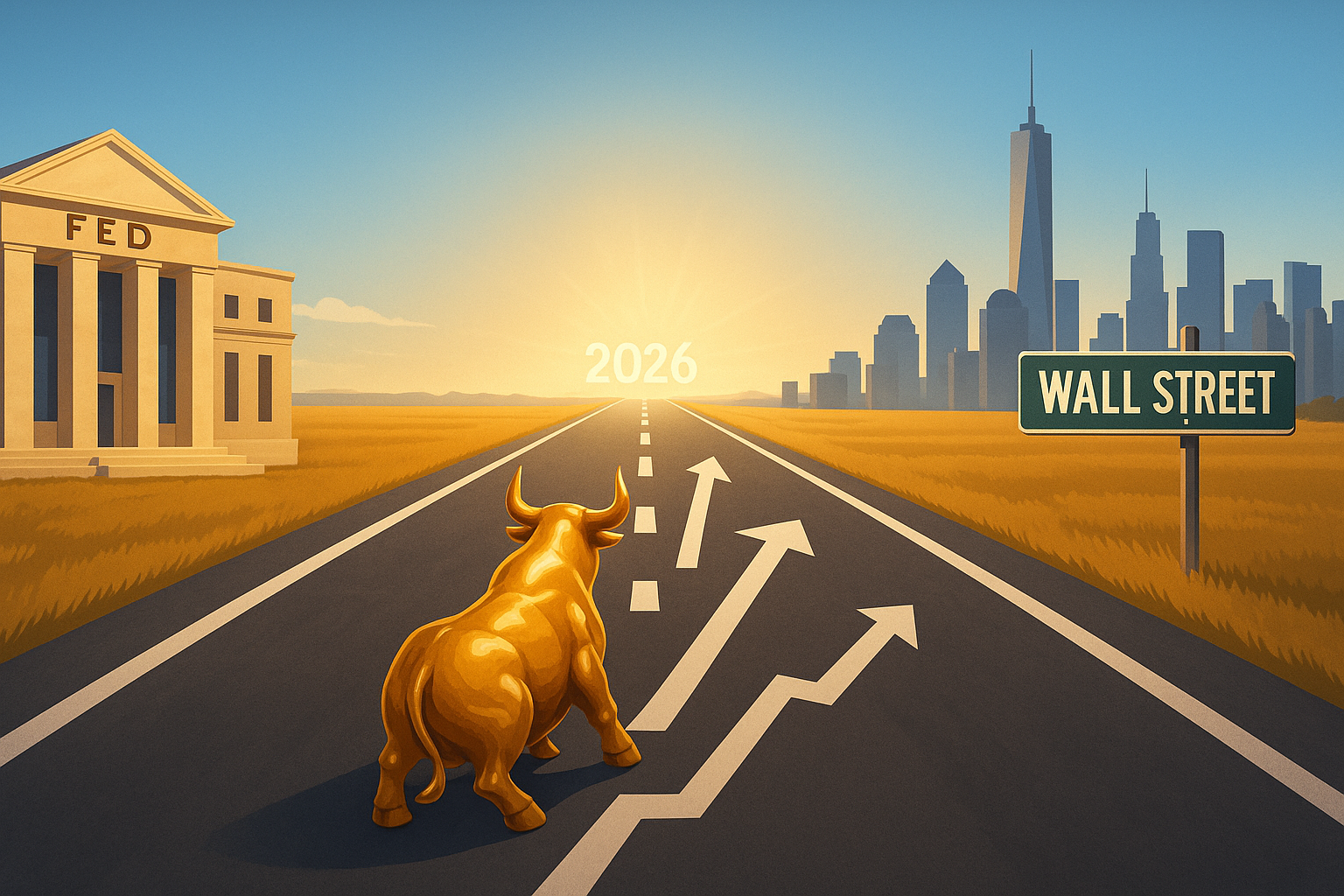
Wall Street's finest are letting themselves dream a little bigger these days. And why shouldn't they? The Fed has finally—after months of playing hard to get—cut interest rates, potentially setting the stage for what some see as years of market gains ahead.
"We're not very hawkish at all on the medium-term outlook," Marcus Rothstein, chief market strategist at Hamilton Partners, told me during a conversation that felt refreshingly devoid of the anxiety that's dominated financial circles lately.
Look, this isn't just about one rate cut. It's about what it represents: a fundamental pivot in monetary policy after the most aggressive tightening cycle in decades. Rates hit levels we hadn't seen since my early days covering finance, and now the pendulum is finally swinging back.
The timing couldn't be more interesting. Inflation? Cooling. Job market? Still surprisingly resilient. It's that rare economic unicorn some strategists have taken to calling a "Goldilocks scenario"—not too hot, not too cold. Just right.
Morgan Stanley's equity team (always quick with the spreadsheets) has already bumped their 2026 S&P 500 target up by nearly 12%. Their reasoning? Something about a "longer runway" for economic expansion.
"The soft landing appears increasingly achievable," they wrote in their latest client report, which landed in my inbox yesterday morning. "With the Fed moving to a more accommodative stance, we see multiple expansion continuing to drive returns even as earnings growth normalizes."
But—and there's always a but in this business—not everyone's buying the extended happy ending.
Jane Williams at Meridian Wealth thinks we might be getting ahead of ourselves. "The market is pricing in perfection," she cautioned, with the kind of measured skepticism that's kept her clients' portfolios intact through multiple cycles. "Any deviation from the expected path of rate cuts or signs of resurgent inflation could trigger significant volatility."
She's not wrong. I've covered enough Fed pivots to know they rarely unfold exactly as the market expects.
What makes this situation particularly tricky is how it differs from historical precedent. Usually when the Fed starts cutting, it's because something's broken. This time? They're easing from a position of relative strength. Different ballgame entirely.
Then there's tech—the 800-pound gorilla that's been carrying this market on its back. Can AI-related investments keep powering higher through 2026? Or will leadership finally broaden out?
Robert Chen at Atlantic Capital Group thinks it's the latter. "We're likely to see a broadening of market leadership," he predicted during our call last week. "Value sectors that have lagged during the high-rate environment—financials, industrials, materials—may finally have their moment as the economic benefits of lower rates permeate the broader economy."
I've heard that prediction before, though. Value's comeback has been "just around the corner" for so long I'm beginning to think the corner doesn't exist.
The international picture complicates things further. Central banks worldwide aren't exactly moving in lockstep these days, creating a patchwork of monetary policies that multinational corporations must navigate. Having covered global markets since the early 2010s, I can tell you this divergence matters more than most domestic-focused analysts acknowledge.
In the end, what companies actually earn will determine whether these optimistic projections materialize or evaporate like morning fog. The consensus view suggests growth will moderate but continue through mid-decade, propped up by tech productivity gains and the delayed effects of easier money.
"The market's forward trajectory depends on whether companies can deliver on elevated expectations," Williams emphasized. "We're watching margin trends closely as labor costs remain elevated despite the Fed's progress on inflation."
So how should investors play it? Most portfolio managers I've spoken with are emphasizing quality and strong balance sheets while maintaining enough exposure to capture potential upside.
"The rally may continue, but it won't be a straight line," Rothstein concluded, echoing a sentiment I've heard in various forms across the Street.
And let's not forget—as if anyone could—there's a presidential election looming. Another wild card in an already complex equation.
Still, the vibe in lower Manhattan has undeniably shifted. After years of inflation anxiety and rate hike fears, the prevailing sentiment suggests the foundation has been laid for continued market strength extending well into 2026.
Will it happen? Who knows. But Wall Street rarely lets reality interfere with a good narrative—especially one that keeps clients fully invested.


