
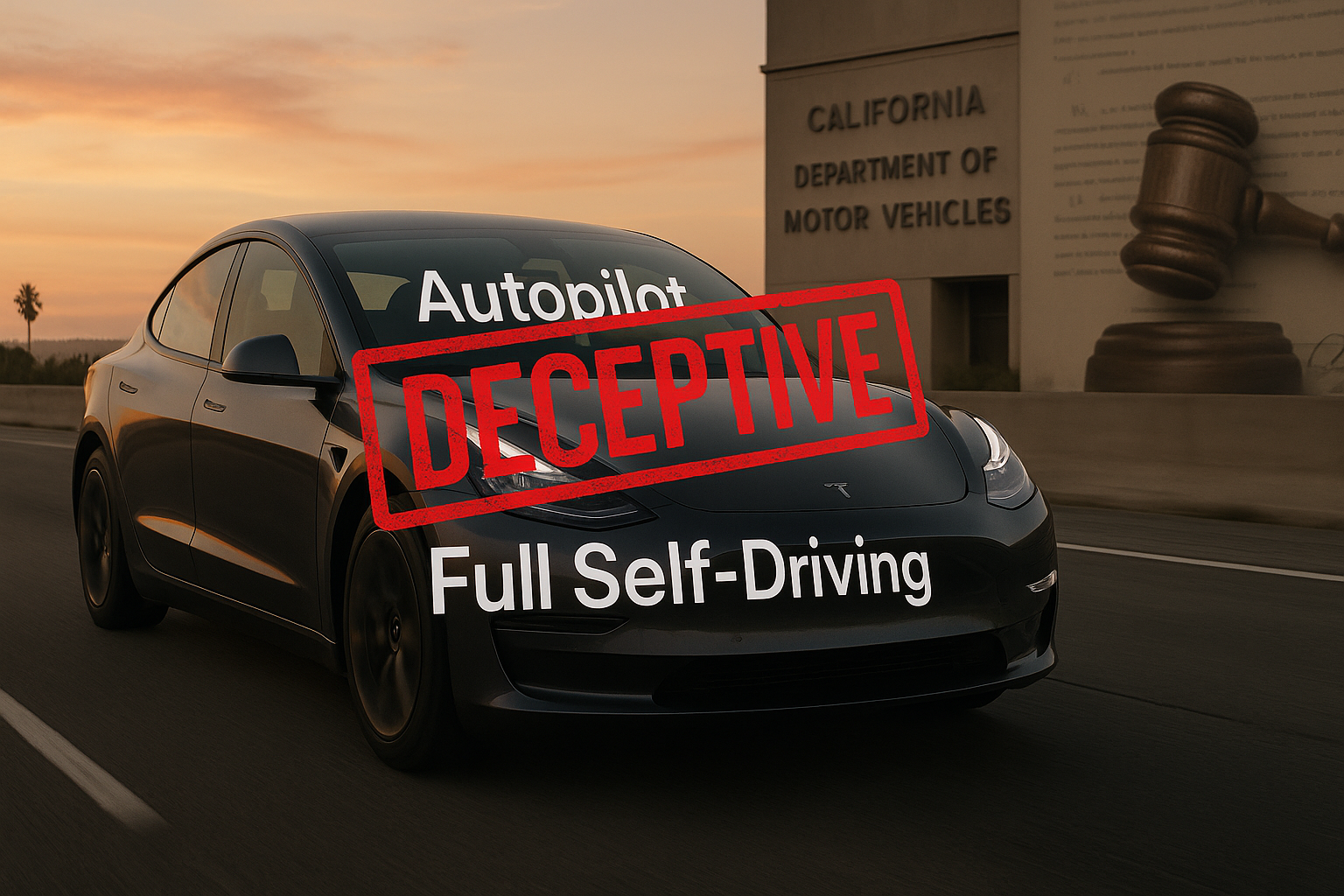
Tesla just got slapped with a sobering regulatory wake-up call in the Golden State. A California judge has ruled that the company's marketing of its Autopilot and so-called "Full Self-Driving" features isn't just optimistic corporate spin—it's downright deceptive.
The California DMV (not exactly known for moving at lightning speed) has given Elon Musk's electric vehicle giant an ultimatum: correct those claims within 90 days or face a 30-day license suspension in California. Ouch.
I've been watching this tension build for years—the growing gap between what Tesla's software promises and what it actually delivers. It was only a matter of time before regulators stepped in.
The ruling hits at something fundamental about our software-obsessed era. There's this massive disconnect between what developers believe their code will eventually do versus what it actually does right now. Tesla has long operated in what you might call the Musk Reality Distortion Field, where tomorrow's capabilities are casually discussed as if they already exist today.
Let's be real about what's happening. The DMV isn't saying Tesla's driver assistance tech is garbage—it does plenty of impressive things. What they're objecting to is language that makes consumers think these systems are fully autonomous when they absolutely require active supervision.
This is, at heart, a truth-in-advertising case.
The auto industry uses a five-level classification for autonomy (Level 5 being completely self-driving under all conditions). Despite their flashy names, Tesla's current systems are firmly Level 2 technology, requiring constant driver attention. Yet "Autopilot" and especially "Full Self-Driving" suggest something much more advanced to average car buyers.
There's an interesting parallel with financial product marketing. The SEC gets mighty upset when sophisticated products are sold to regular folks using language that glosses over risks. They don't let hedge funds advertise "guaranteed returns," and now the California DMV won't let Tesla imply its cars drive themselves when... they don't quite.
So what are Tesla's options during this 90-day correction period?
They could rename their products with less autonomous-sounding names (goodbye "Full Self-Driving," hello "Advanced Driver Assistance Plus"?). Or maybe add more prominent disclaimers. Perhaps fight the ruling through appeals. Or—and this seems most on-brand for Musk—try to accelerate software development to match those lofty marketing claims.
The stakes are high. California is Tesla's largest U.S. market, and a month without selling vehicles there would be a substantial financial hit. This isn't just regulatory paperwork—it's a material risk to Tesla's business.
What makes this particularly fascinating (having covered tech regulation for over a decade) is how it reflects broader tensions in how we govern technology companies. The "move fast and break things" philosophy works fine for social media apps. But when your software controls a two-ton vehicle moving at highway speeds? Regulators understandably take a more conservative view.
For Tesla investors, this highlights a key risk. Much of Tesla's premium valuation assumes their leadership in autonomous driving will eventually unlock new business models. Regulatory speedbumps that force more conservative messaging could delay that timeline considerably.
The irony? Tesla's systems truly are impressive technological achievements—probably the most advanced driver assistance features available to consumers. But by over-promising capabilities, they've created a perception gap that regulators are now forcing them to address.
Meanwhile, Tesla owners continue experiencing the uncanny valley of automotive autonomy—vehicles that handle many driving tasks but still need human supervision. It's a stark reminder that the path to fully autonomous vehicles isn't just about solving technical challenges. It also involves regulatory, legal, and communication hurdles that even Elon's famous reality distortion field can't simply wish away.


