
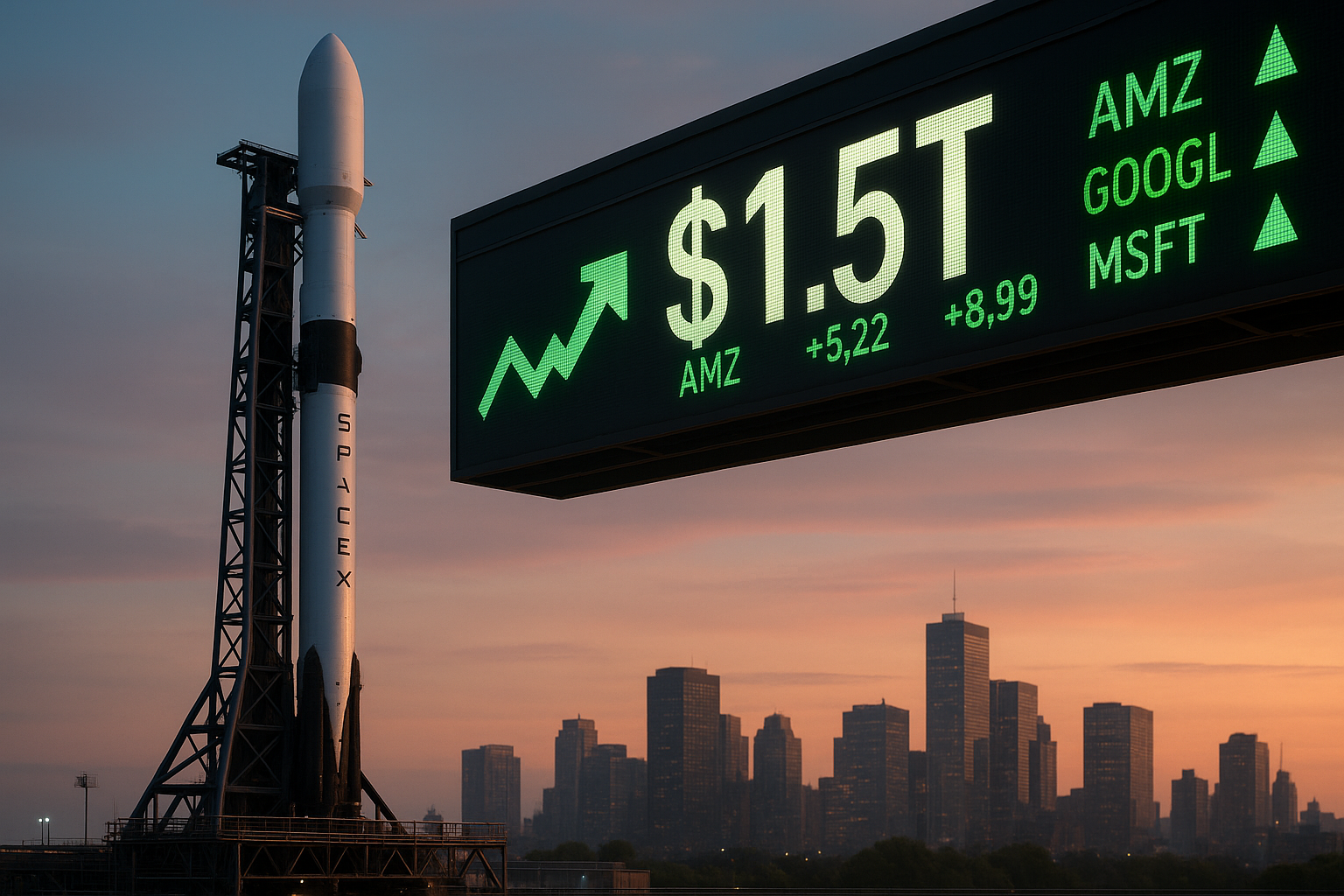
The whispers have turned to outright chatter on trading floors across Manhattan. SpaceX—Elon Musk's rocket company that has somehow made explosions look like progress—is reportedly eyeing a 2026 public offering at a valuation that makes even seasoned venture capitalists do a double-take: $1.5 trillion.
Yes, trillion. With a T.
Let's put that in perspective. We're talking about a company that has yet to turn a consistent profit being valued at more than Disney, Netflix, and McDonald's... combined. And then some.
I've been covering tech valuations since the days when people genuinely believed Webvan would revolutionize grocery shopping. This feels different—but also eerily familiar.
The bull case for SpaceX isn't exactly subtle. They've done what nobody thought possible: created reusable rockets that land themselves like something straight out of science fiction. Blue Origin, backed by Bezos' seemingly bottomless pockets, is still playing catch-up. Traditional aerospace companies like Boeing and Lockheed Martin look like they're building steam engines in comparison.
Then there's Starlink. Having spoken with several users in remote areas, I can confirm the service delivers what it promises—high-speed internet where traditional providers shrug and say "good luck." The subscription model makes investors salivate, and for good reason.
But $1.5 trillion? C'mon.
This valuation assumes not just market dominance but practically market invention. It's pricing in Martian colonies and asteroid mining and God knows what else from Musk's fever dreams. (And to be fair, his fever dreams have a habit of materializing.)
The challenge for potential investors—whether institutional players or retail traders hoping to catch a rocket to wealth—is that traditional valuation metrics simply don't apply here. What's the appropriate P/E ratio for a company planning to colonize another planet? How do you calculate customer acquisition costs when your potential market includes literally everyone on Earth... and beyond?
Look, we've seen this movie before. The dotcom bubble gave us Pets.com. The EV bubble briefly made Rivian worth more than Volkswagen despite having shipped fewer vehicles than I have fingers. Markets get irrationally exuberant, especially about charismatic founders with grandiose visions.
What makes this particularly tricky is that SpaceX has been private for two decades. The real winners—the early investors who backed Musk when Mars colonization sounded like the rambling of a Silicon Valley crank—have already made their fortunes. By the time retail investors get a shot, the easy money will have been made.
Having tracked SpaceX's private funding rounds since 2015, I've watched the valuation climb from around $10 billion to north of $150 billion today. That's a 15x return before the company even hits public markets!
But here's the contrarian take that keeps me up at night: what if $1.5 trillion is actually... reasonable? Or even low?
If—and it's a galaxy-sized if—SpaceX achieves even half of what Musk envisions, we're talking about multiple trillion-dollar businesses under one corporate roof. Global broadband. Space tourism. Government contracts. Earth-to-Earth rapid transit. Lunar operations. Martian infrastructure.
Each of these could be a hundred-billion-dollar business line. Together? The math starts to make your head hurt.
The problem is that Wall Street doesn't do well with companies that need decades to realize their vision. The first quarter SpaceX misses projections because they decided to redesign the Starship heat shield instead of focusing on immediate revenue, watch how quickly analysts turn hostile.
So what's the play for investors? If history is any guide (and it usually is, despite what tech bros claim about paradigm shifts), sizing your position carefully is crucial. This isn't a set-it-and-forget-it investment—it's a ticket to volatility that would make crypto traders reach for the motion sickness bags.
My suggestion? Wait for reality to cause a temporary pricing reset. Because even rockets experience gravity... eventually.
And maybe keep some cash on hand for when Mars colonization gets delayed for the third time. That's when you'll get the bargain of the century—or the investing lesson of a lifetime.


