
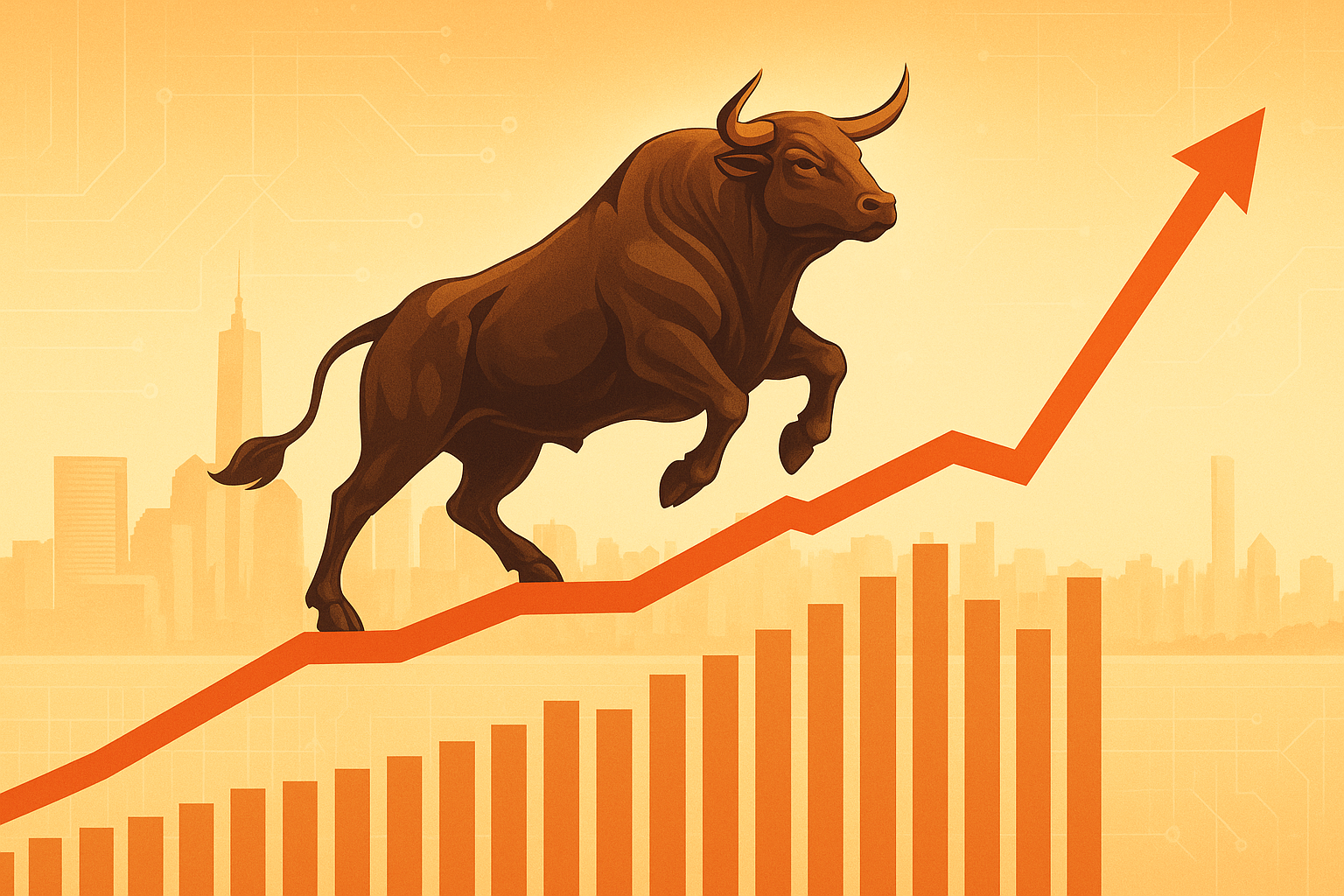
The market cycle, like fashion, seems to follow its own inscrutable rhythm. As we close out 2025 with the S&P 500 bull market hitting its three-year mark, Carson Group's Ryan Detrick has been making the rounds with a statistically compelling observation: once a bull market survives to age three, it typically lives to the ripe old age of eight. This is based on market data stretching back to 1950, which feels a bit like noting that humans who survive past 35 tend to make it past 80 – technically true but suspiciously neat.
Look, I've spent enough time on trading floors to know that we love patterns. We crave them. We'll find them in cloud formations and coffee grounds if that's what it takes to feel like we understand what's happening. But let's unpack this one, because there might actually be something here beyond our collective statistical pareidolia.
The Self-Reinforcing Bull
The three-year threshold matters because it represents a psychological inflection point. Early-stage bulls are fragile creatures, easily spooked by bad news and uncertainty. But a mature bull market develops its own gravitational pull. Institutional investors who sat out the early stages start feeling the existential pain of underperformance. Retail money that's been hiding in money market funds begins trickling in as FOMO overwhelms caution. Before long, everyone's feeding the beast.
This dynamic helps explain why HSBC's target of 7,500 for the S&P doesn't sound as ridiculous as it would have in 2023. They're pointing to sustained AI infrastructure spending as the primary driver, which brings me to our current market's technological tilt.
The Nasdaq's 22% gain this year tells a story of tech dominance that makes the late '90s look balanced by comparison. But unlike that era's "eyeballs over earnings" madness, today's tech giants are actual profit machines. AMD's staggering 81% surge in 2025 comes on the back of genuine demand for its AI chips, not just speculation about what might be.
Which reminds me – I've always found it amusing that we call them "graphics processing units" when their primary purpose now is to train large language models to write essays about why graphics processing units are in demand. There's something delightfully recursive about it.
The Magnificent Seven Become The Tiresome Ten
Speaking of recursive loops, Alphabet's 67% rise this year continues the "Magnificent Seven" narrative that's been dominating financial media since, what, 2021? At some point, we'll need to acknowledge that our market has essentially become these companies plus 493 diversification accessories. Maybe that's fine! But it does make one wonder about the information value of the S&P 500 as an index when a handful of firms determine its direction.
Are AMD and Alphabet the best plays for 2026? I'm skeptical, and not just because of their spectacular 2025 runs. When everyone at the country club is talking about the same stocks (and trust me, they are), contrarian alarm bells start ringing. The problem is that contrarianism itself has become mainstream, creating a weird meta-contrarian loop where the truly contrarian position might be... going with the crowd?
Here's a framework I find useful: Look for companies benefiting from the same macro trends driving AMD and Alphabet, but without the spotlight. The AI infrastructure buildout requires more than chips and cloud services – it needs power infrastructure, cooling systems, specialized real estate. These picks and shovels plays often offer similar exposure with less performance pressure.
The Probability Cloud
The eight-year average bull market duration is just that – an average. Some bulls die young; others live to see a decade. The key insight isn't that we're guaranteed five more years of gains, but that momentum tends to sustain itself until something fundamental breaks the pattern.
What could that be? The usual suspects: inflation resurgence, geopolitical shocks, regulatory crackdowns. But the most dangerous market killers are the ones nobody's talking about yet. Remember, in 2019 "global pandemic" wasn't exactly topping most risk managers' concern lists.
So yes, history suggests 2026 will continue our upward trajectory. But history also once suggested that cargo shorts would never return to men's fashion, and yet here we are. The best approach, as always, is probabilistic thinking – position for the most likely outcome while acknowledging the distribution of possibilities.
And maybe keep some powder dry. Just in case.


