
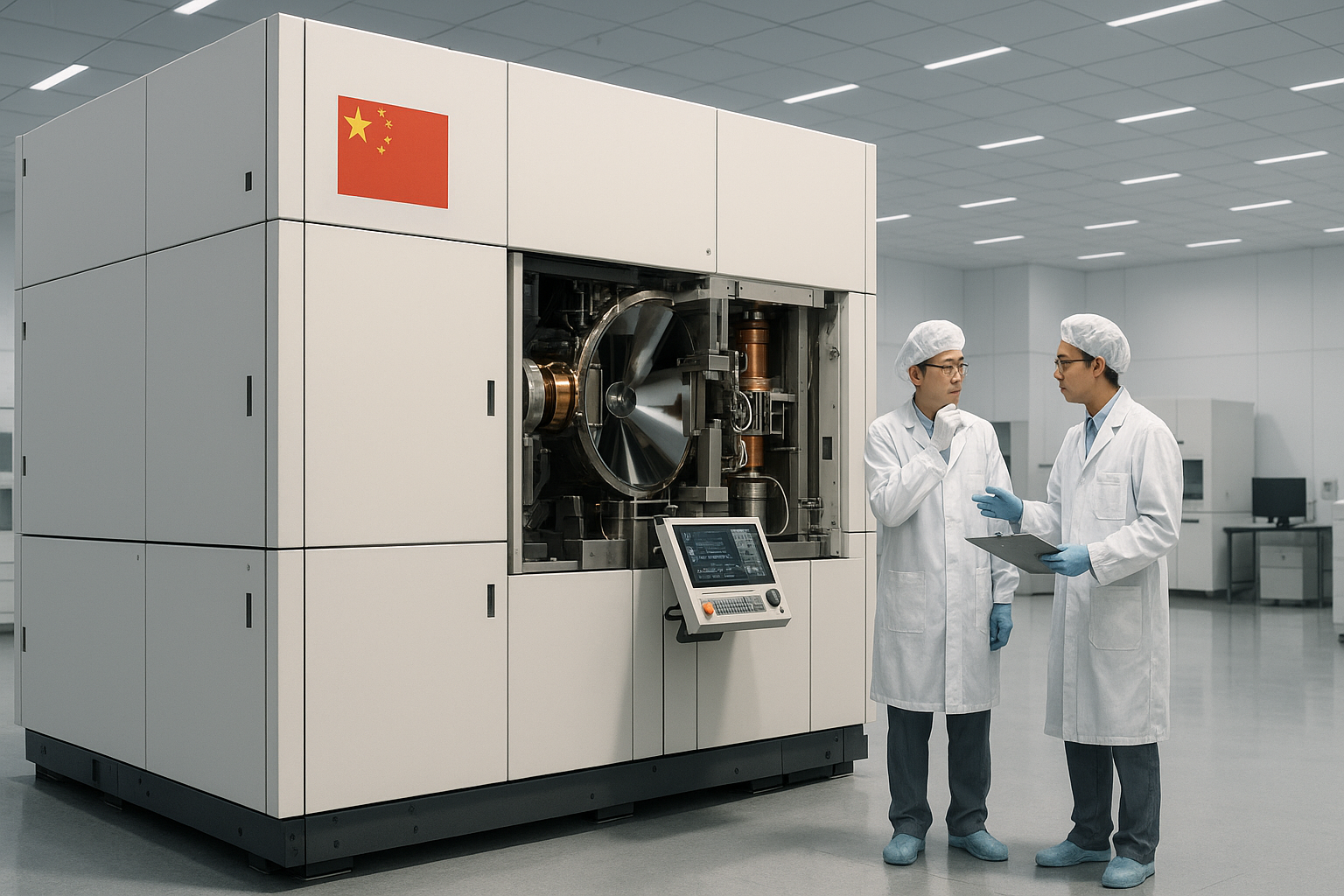
ASML shares plunged a stomach-churning 6% yesterday after Reuters dropped what can only be described as a semiconductor industry bombshell: China has apparently developed its own prototype extreme ultraviolet (EUV) lithography technology.
Let me put this in perspective. For the tech world, this is like hearing someone has successfully cloned your "impossible-to-replicate" secret recipe—the one your entire business empire depends on.
The Dutch chip equipment giant has enjoyed what seemed like an unassailable position at the top of the semiconductor food chain. Their EUV machines—complex beasts that cost north of $150 million each—have essentially functioned as the gatekeepers to cutting-edge chip manufacturing. The U.S. government has spent years making absolutely certain these machines never reached Chinese shores, creating what Washington believed was an ironclad technological containment strategy.
But here's what policymakers keep forgetting: technological barriers are only impenetrable until... well, they're not.
According to Reuters' reporting, Chinese scientists working in a high-security Shenzhen lab have managed to do exactly what American export controls were designed to prevent—they've built a prototype machine capable of producing the advanced chips that power everything from the latest smartphones to sophisticated weapons systems.
I've covered the semiconductor industry since 2018, and watching the market reaction yesterday felt like observing the five stages of grief playing out in real time. First came denial ("It's just a prototype!"), then anger, followed by a messy mixture of bargaining and depression as reality sank in.
This development sits at the uncomfortable intersection of Western policy assumptions and Chinese determination. The export restrictions implemented by the U.S. and allies were built on a fundamental premise: certain technologies were simply too sophisticated for China to develop independently within any meaningful timeframe. This assumption provided both economic advantage and national security comfort.
But look, the history of technology transfer barriers is littered with failures. Remember when nuclear know-how was supposedly confined to a select club? Or when satellite technology was the exclusive domain of superpowers? These barriers always fall—it's just a question of when.
The market's sharp reaction reflects something deeper than ASML's potential revenue challenges. It signals a dawning recognition that the semiconductor containment strategy might have fundamental flaws. Export controls don't just restrict access; they create powerful incentives for self-sufficiency.
And China? With its massive market, manufacturing ecosystem, and deep pockets? Perhaps the worst possible target for a strategy that essentially challenged them to develop these capabilities themselves.
What makes this particularly fascinating (and for ASML shareholders, concerning) is the timing. The semiconductor industry is already navigating the choppy waters of AI-driven demand spikes, geopolitical fragmentation, and resurgent industrial policy across the globe. ASML has been posting record orders while simultaneously trying to dance between U.S. national security concerns and its own substantial business interests in China—which accounts for roughly 15% of its sales even with existing restrictions.
Is ASML's business model suddenly obsolete? Not by a long shot. There's a vast gulf between building a prototype and achieving the precision manufacturing at scale that ASML has perfected over decades. Their EUV machines combine cutting-edge optics, precision mechanics, and sophisticated software in ways that aren't easily replicated.
(Having toured an ASML facility back in 2019, I can attest to the mind-boggling complexity of these systems—they're essentially the most complicated machines humans have ever built.)
But markets hate uncertainty, and this news introduces a significant new variable. If China can eventually produce its own EUV machines—even if they're initially less capable—it fundamentally alters the long-term competitive landscape.
The broader lesson? Technological containment strategies have limits. In a world where information flows despite barriers and where the motivation for technological self-sufficiency is increasingly tied to national security, betting against determined catch-up efforts seems increasingly naive.
For investors who've ridden ASML's remarkable multi-year run, the million-dollar question becomes whether the market has overreacted or is properly pricing in a new reality. History suggests that technological monopolies are typically more temporary than they appear—but also that disruption usually takes longer than initial fears suggest.
In the meantime, the semiconductor industry is perhaps learning what nuclear physicists discovered decades ago: the most sophisticated technologies, when deemed essential to national interests, have a way of spreading despite our best efforts to contain them.
What was that old line about genies and bottles?


